



Scroll down!


What is the true environmental cost of your closet?
Clothes are everywhere in our daily routines, but how often do we stop to think about where they come from?
Or where they end up?
“American shoppers consume about five times more clothing now than they did in 1980. As a whole, the world’s citizens acquire some 80 billion apparel items annually."
And yet, the average item is only worn seven times before being discarded.
Denim is a wardrobe staple for millions worldwide. However, very few ever stopped to consider its environmental toll.
Jeans are exceptionally harmful to the environment due to their incredibly resource-intensive production process.
In fact, they are one of the most environmentally damaging sectors in the fashion industry.
In Xintang, known as the “denim capital of the world, more than 300 million pairs of jeans are produced each year. This is more than one-third of the world’s denim.
The United States alone accounts for over 22% of global denim consumption.


The lifecycle of one pair of cotton jeans requires approximately 999 gallons of water, equivalent to nearly five years of drinking water for one person. It also generates around 74 pounds of CO₂ emissions, roughly the same as driving a gas-powered car 85 miles.
But that impact doesn’t begin in your closet. It begins long before that.
It starts in a cotton field...

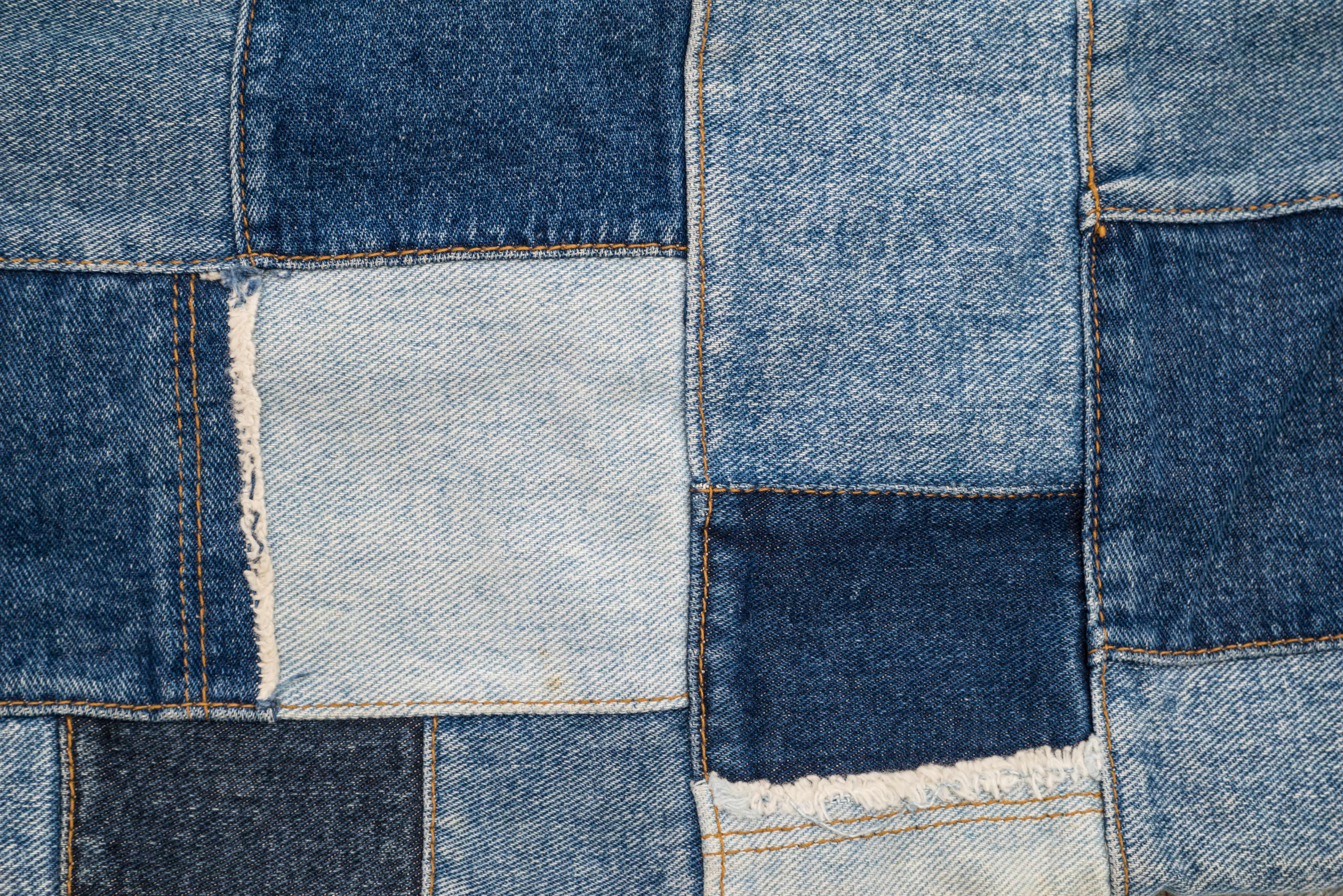
A typical cotton garment, like a pair of jeans, begins its life on a farm.
Cotton usually grows in the Northern Hemisphere, most likely in China, India, the United States, Brazil, or Pakistan. Together, these countries account for nearly 75 percent of global cotton production.
Cotton is grown for about 130 to 160 days before it is mechanically harvested.
Cotton, an incredibly water-intensive crop, is often grown in some of the world’s driest regions.
The average person drinks about 182.5 gallons of water per year.
Meanwhile, our jeans collection has used the equivalent of 52.5 years of drinking water for one person.
At current production levels, global denim manufacturing consumes enough water each year to fill approximately 3.6 million Olympic-sized swimming pools.
Additionally, cotton uses more insecticides and pesticides than any other crop in the world. These chemicals can harm surrounding ecosystems and nearby communities.
Finally, cotton seeds are sown and irrigated until they grow into fluffy plants. These fluffy plants are harvested and transported to textile mills, where the fibers are processed into fabric.


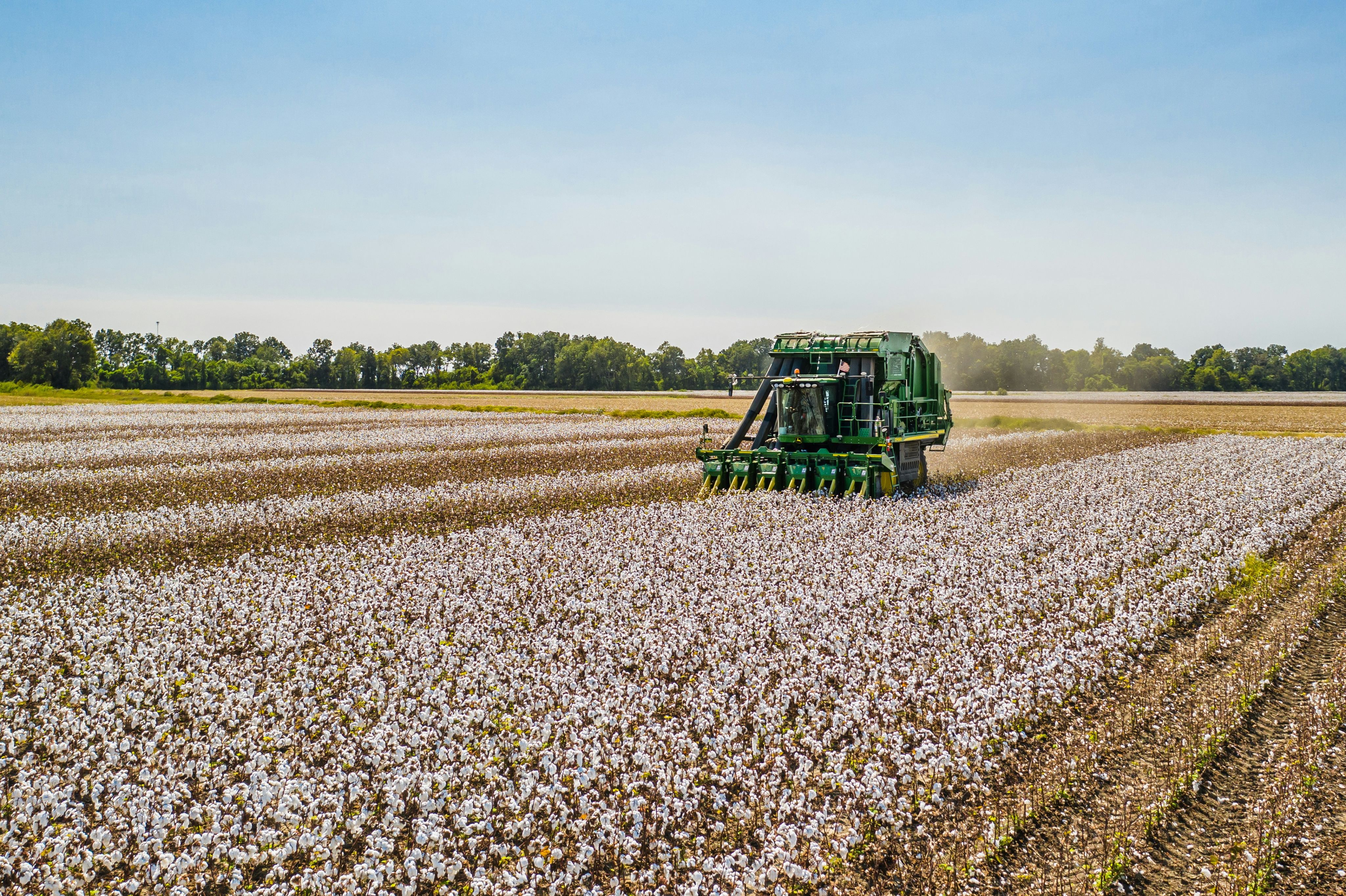
After the cotton leaves the farm, it is taken to a textile mill where an industrial cotton gin separates the fluffy bolls.
Then, the cotton lint is pressed into 490 lb bales.
Some garments are made with organic cotton, which is grown without any insecticides or pesticides. But organic cotton makes up only 1% of the roughly 110–120 million 490 lb bales of cotton produced worldwide annually.


Once the cotton bales are ready,
they are shipped to spinning facilities, usually in China
or India, where large machines will convert the cotton into fabric.
Here, fibers are processed in large machines and spun into threads or ropes of yarn.


The yarn is then sent to the mill, where huge knitting machines weave it into sheets of rough, grey fabric. These sheets of fabric are treated with heat and chemicals until they become soft and white.
The white fabric is then treated with other bleaches, chemicals, and dyes to give it the vivid coloring we see in most commercial fabrics.


Chemical waste released from factories often contaminates rivers and oceans. These chemicals are harmful both to humans and the environment.
Then, the fabric is assembled and sewn into garments by workers primarily in countries like China,

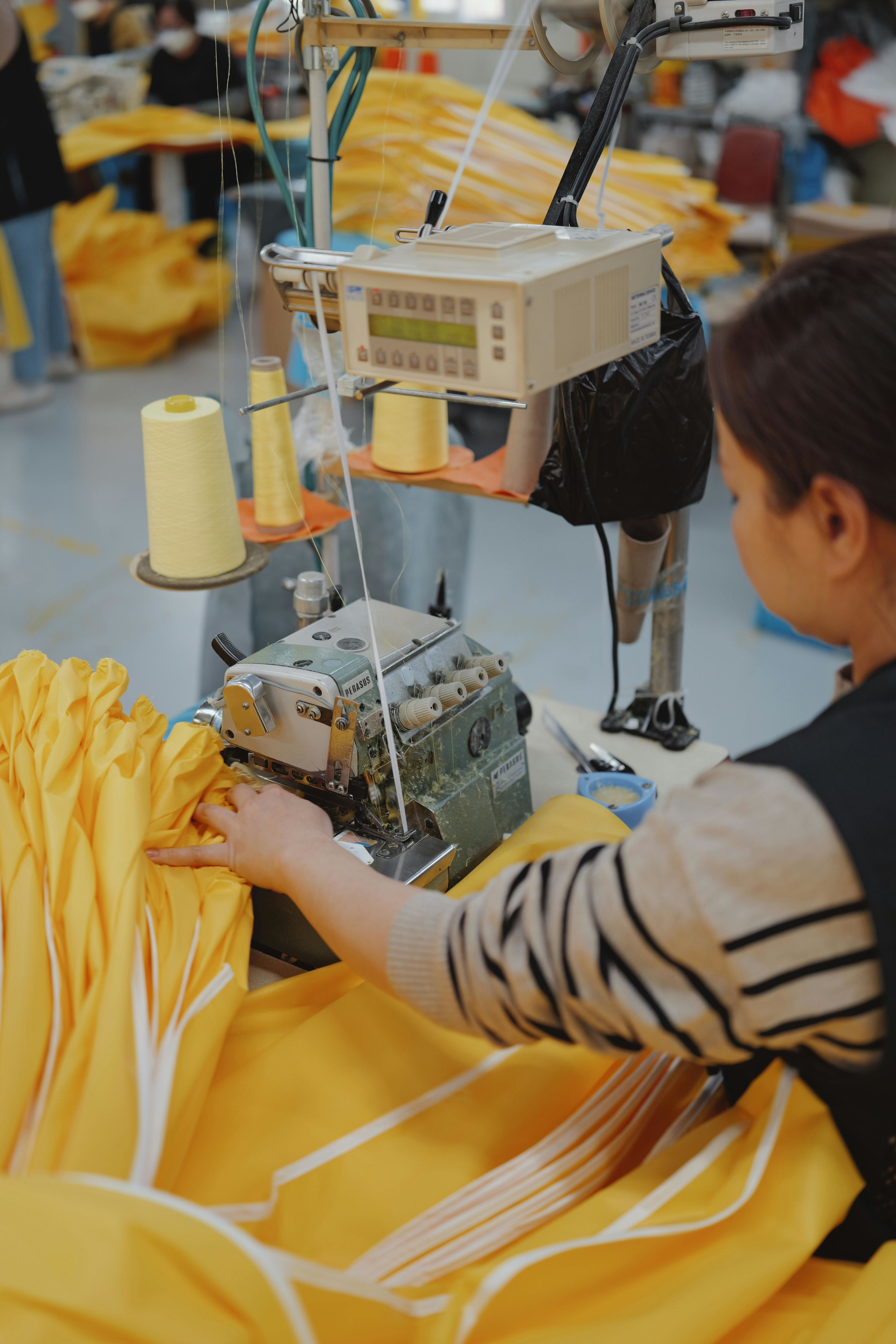
India,

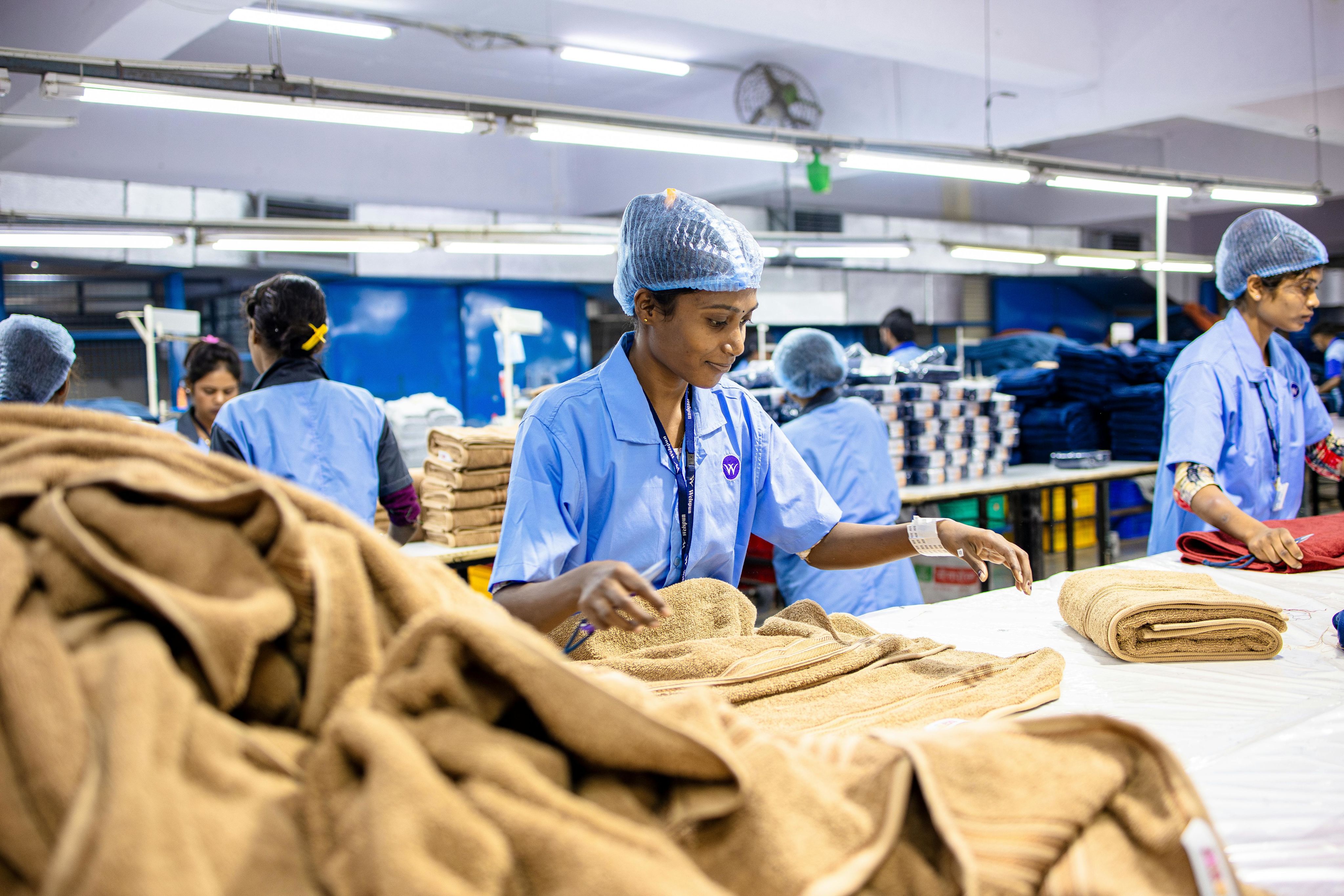
Bangladesh,

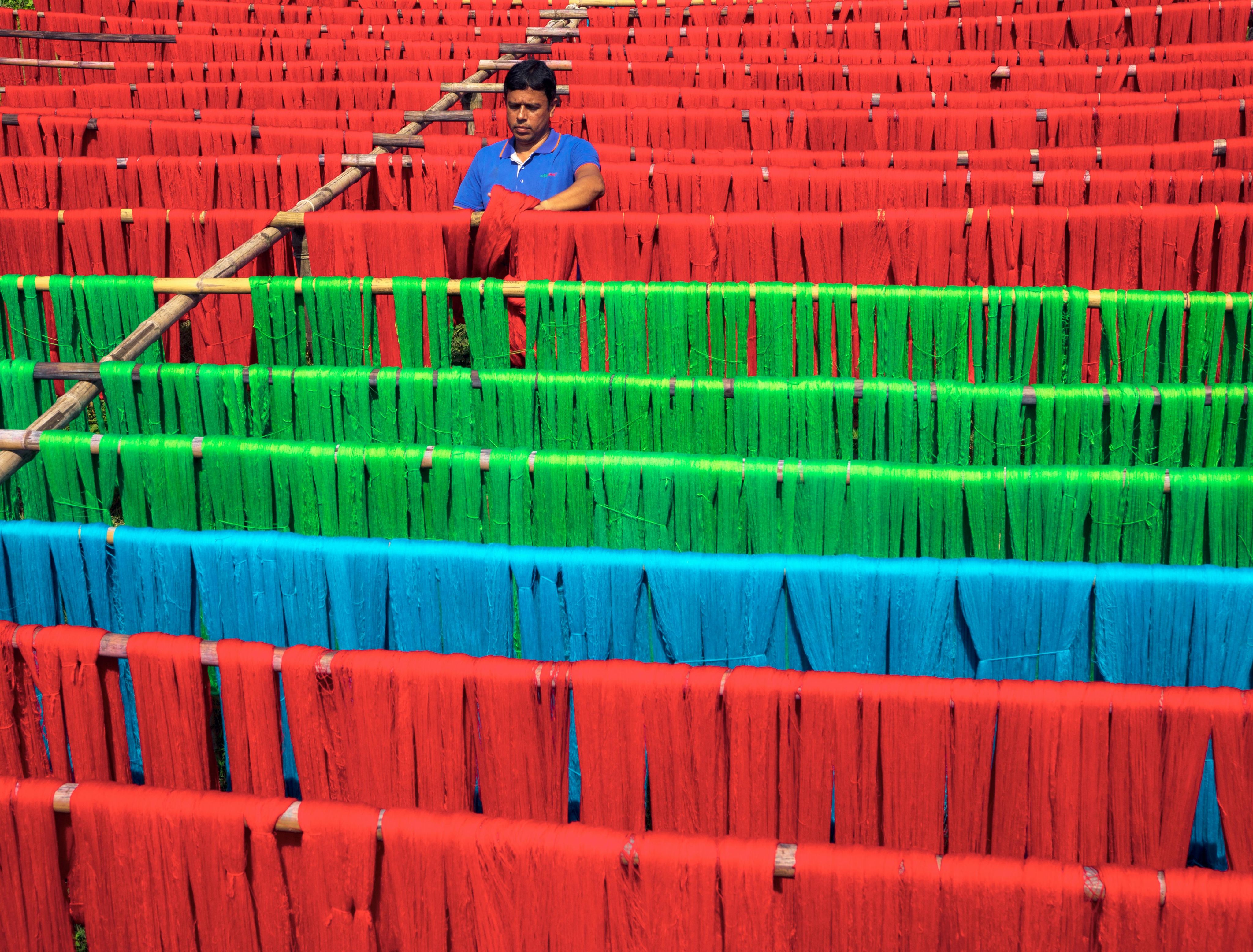
or Vietnam, among others.

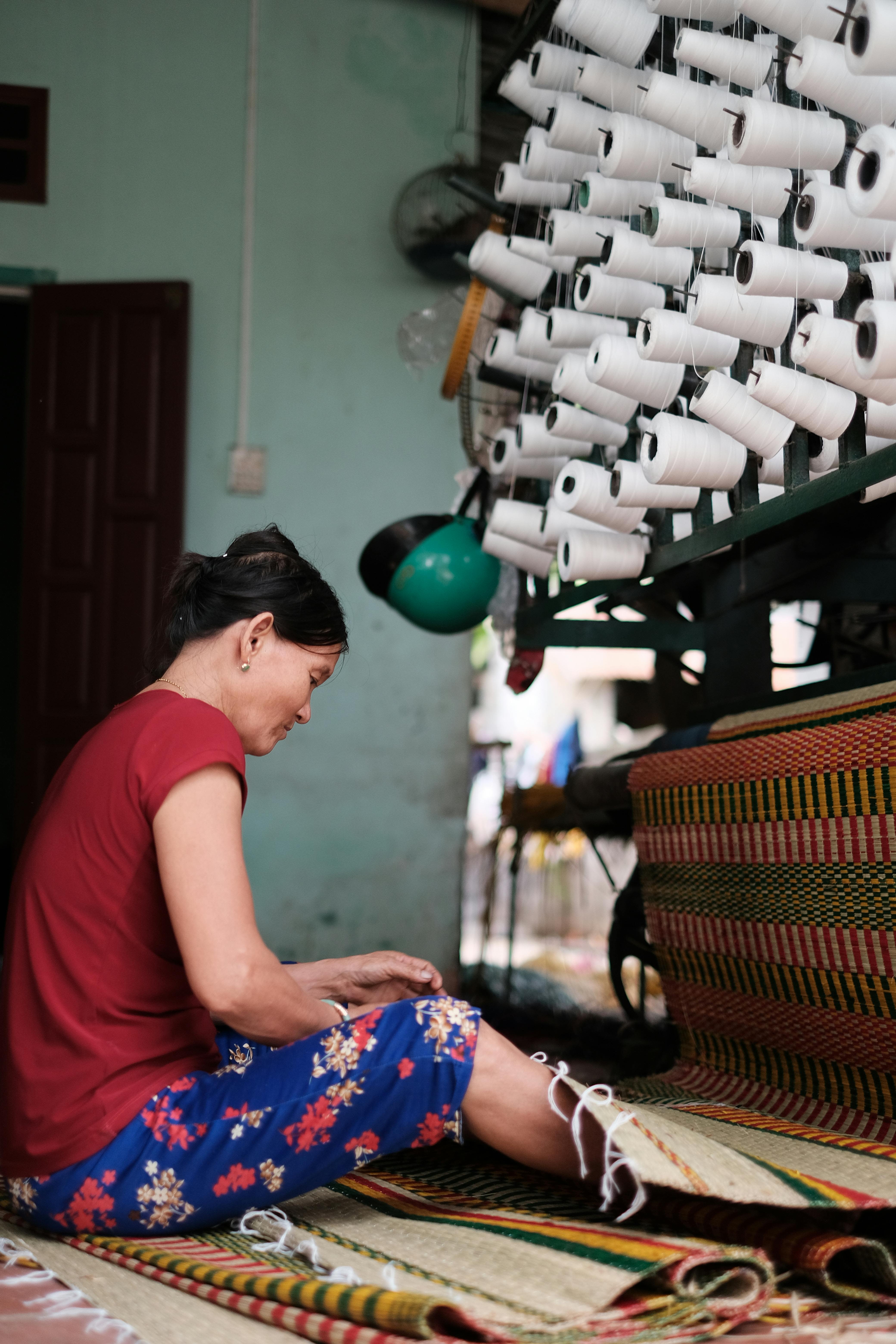

The garment is then sent by airplane, cargo ship, truck, or some combination of the three to high-income countries where it will be sold. Garments go from factories to warehouses, and then to stores or directly to consumers.
But clothing manufacturing is only part of the story. The rest is shaped by how we shop, wear, wash, and discard our clothes.

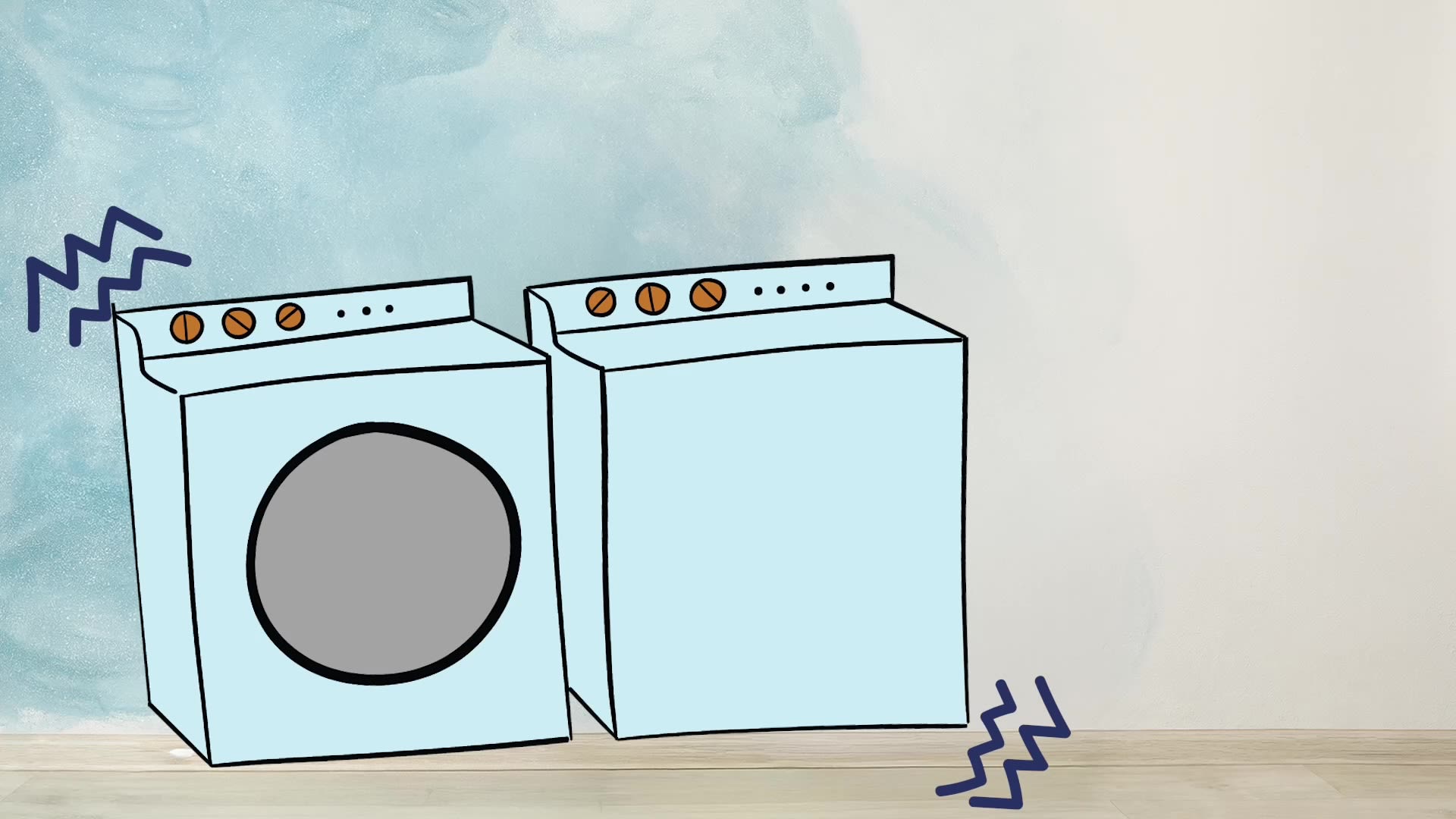
Once the garment makes it to the consumer's home, it undergoes one of the most resource-intensive phases of its lifetime.
It is estimated that 25% of a garment’s carbon footprint comes from laundry.
In the U.S., the average household does about 400 loads of laundry per year, with each load using about 40 gallons of water.
Dryers use 5-6 times more energy than washing machines, making them one of the biggest hidden energy drains in a garment’s life.
All of this adds up. Washing and drying make up 37% of a garment’s carbon emissions.
On a global scale, the water used to wash our clothes adds approximately 4.5 trillion gallons of water to the fashion industry’s water footprint.

These impacts are part of a broader cycle of consumption, where clothes are worn briefly, discarded quickly, and rarely recycled in meaningful ways.
The reality of textile recycling & garment disposal
LESS THAN
1%
of clothing is recycled into new clothing.
IN 2019, RECYCLED POLYESTER MADE UP
14%
of total polyester used in fashion. By 2030, that number is projected to fall to 7.9%. And most recycled polyester in clothing doesn’t come from old clothes. It comes from recycled plastic bottles.
AFTER DISPOSAL
41%
of garments are incinerated. 58% are exported internationally, often to countries that don’t have the proper infrastructure to dispose of garments.
Most clothes leave our closets almost as quickly as they arrive.
Americans throw out 17 million tons of clothing and textiles each year, with 65% of clothing discarded within 12 months of purchase.
That means 2 out of every 3 items in your closet won’t be there next year.

So what kind of impact is your closet leaving behind?
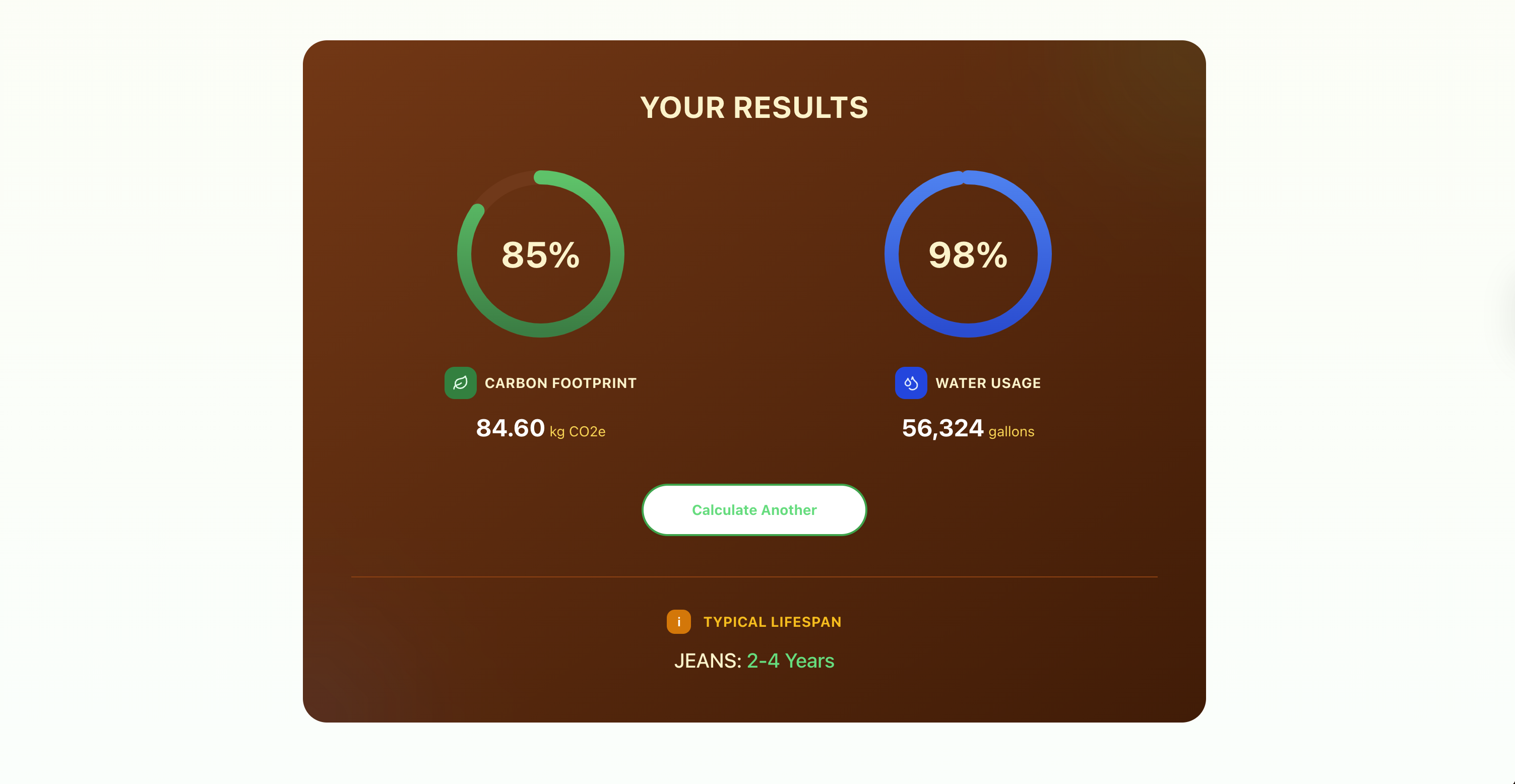
Use our custom impact calculator to find out.




Discover Your Closet's Environmental Impact
Our impact calculator helps you understand the environmental footprint of your wardrobe. By analyzing the water usage and carbon emissions associated with different garments and materials, you can make more informed decisions about your clothing choices and contribute to a more sustainable future. This section will walk you through how to use it.
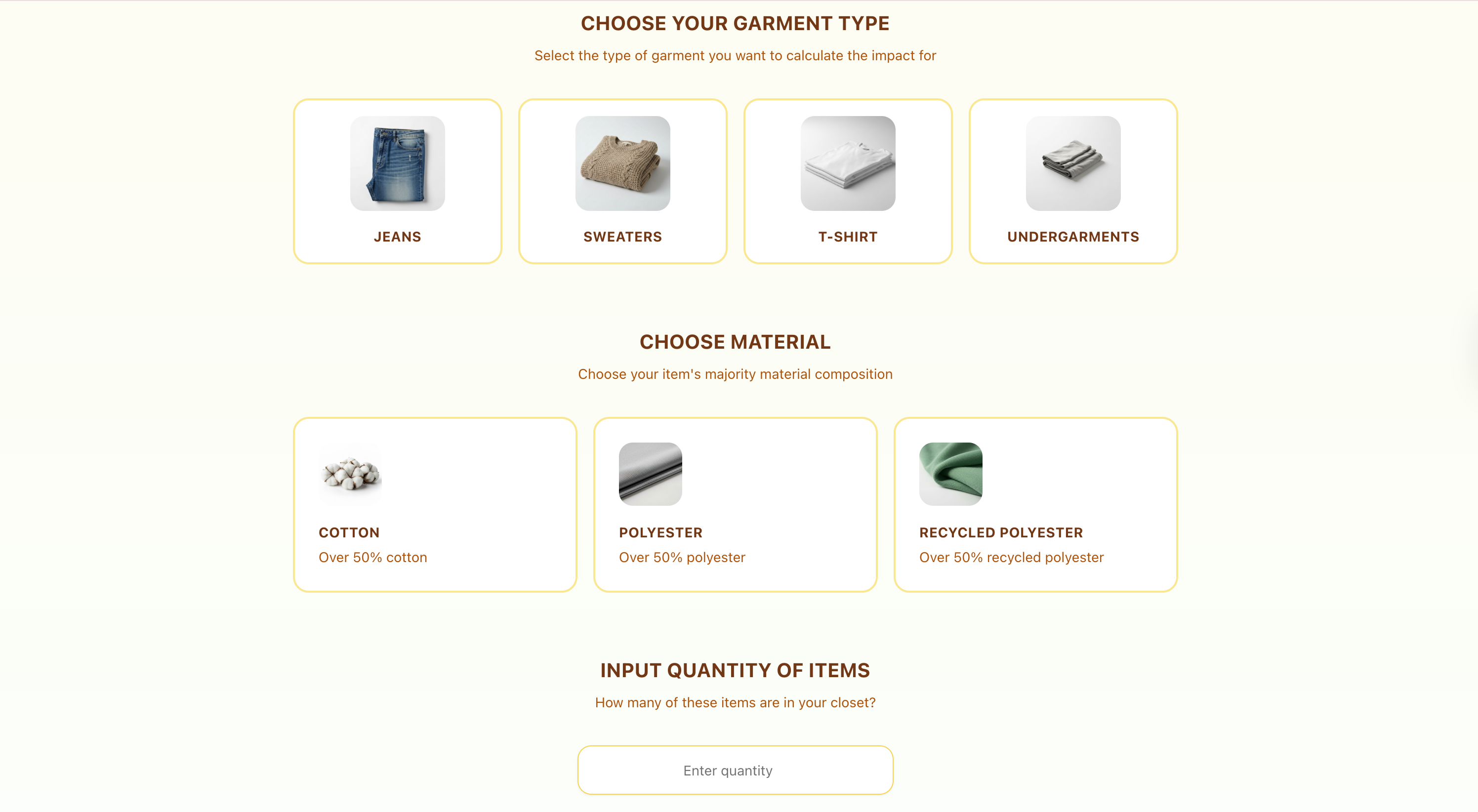
How to Use
1. Pick which garment you want calculate.
2. Choose the primary material the garment is composed of.
3. Input the number of garments you are calculating.
4. Click the 'Calculate' button.
Get Your Results
After inputting your data, the impact calculator will show you your wardrobe's water usage, carbon footprint, and overall garment lifespan.
 Built with Shorthand